





AI Overview
Farmers in Syangja are diversifying into commercial banana and flower cultivation, while new supply chains are bringing Jumla apples directly to local doorsteps.
Read the full report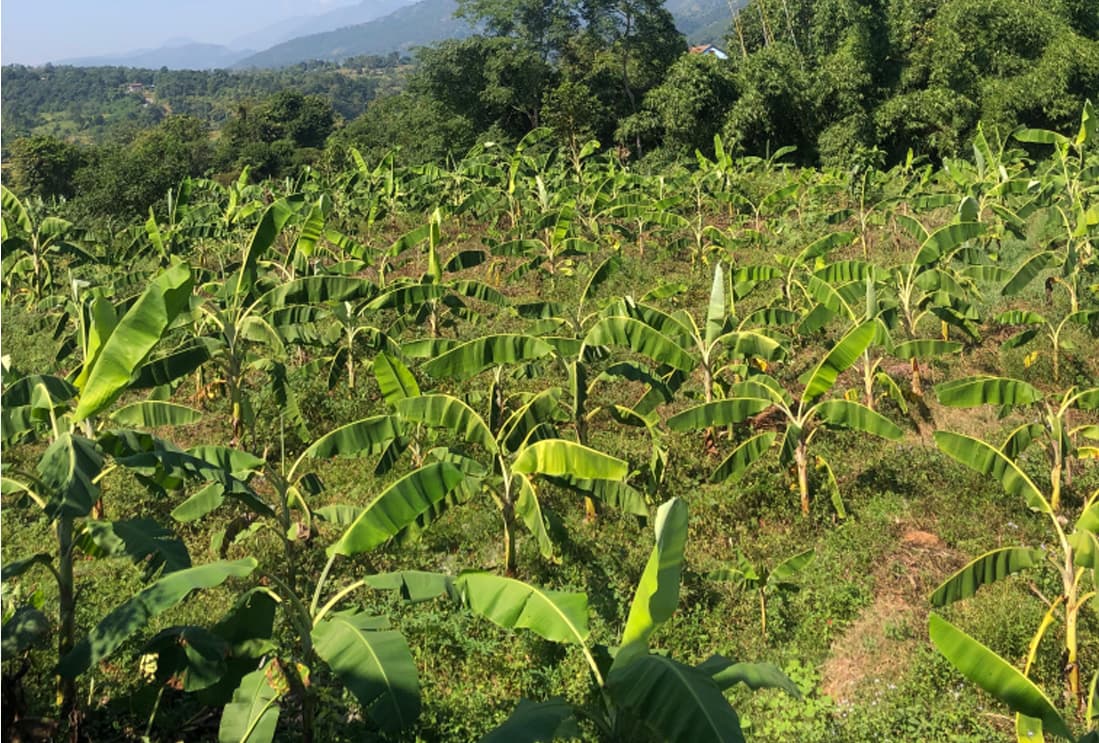
Farmers in Syangja are transitioning from traditional grain crops to high-value commercial agriculture. In Chapakot, farmer Prem Narayan Pangeni has expanded his operation to 61 ropanis, focusing exclusively on the Malbhog banana. Pangeni, who replaced rice and maize with 6,200 plants, reports that 2,200 currently bearing fruit generate over Rs 1.1 million annually. He projects earnings will exceed Rs 3 million once the plantation matures. Commercial floriculture is also expanding in Galyang and Kaligandaki, where farmers cultivate marigolds. Growers note that flowers are less susceptible to wildlife damage and have reduced reliance on imports from India. While price competition remains, local producers are increasingly supplying regional markets. Simultaneously, traders led by Gauri Lal Sanjyal are distributing Jumla apples directly to residents. By bypassing traditional supply chains, this door-to-door model sells organic fruit at Rs 150 per kilogram, mitigating post-harvest losses for Jumla farmers while providing consumers with an affordable alternative to imported produce.
1 article
Farmers in Syangja are diversifying into commercial banana and flower cultivation, while new supply chains are bringing Jumla apples directly to local doorsteps.
Read the full reportBusinessperson Gauri Lal Sanjyal, who leads the distribution of Jumla apples in Syangja and surrounding districts, noted that the door-to-door sales model has successfully connected farmers directly with consumers. According to reports from Nepal Watch and Newspolar, the initiative has helped reduce post-harvest losses that previously saw Jumla's apple crops rot due to lack of market access.
Sanjyal stated that the apples are increasingly popular because they are organic and free from the artificial coloring or pesticides often found in imported varieties. He added that the direct sales model ensures consumers receive the fruit at a lower price while allowing farmers to secure immediate cash payments.