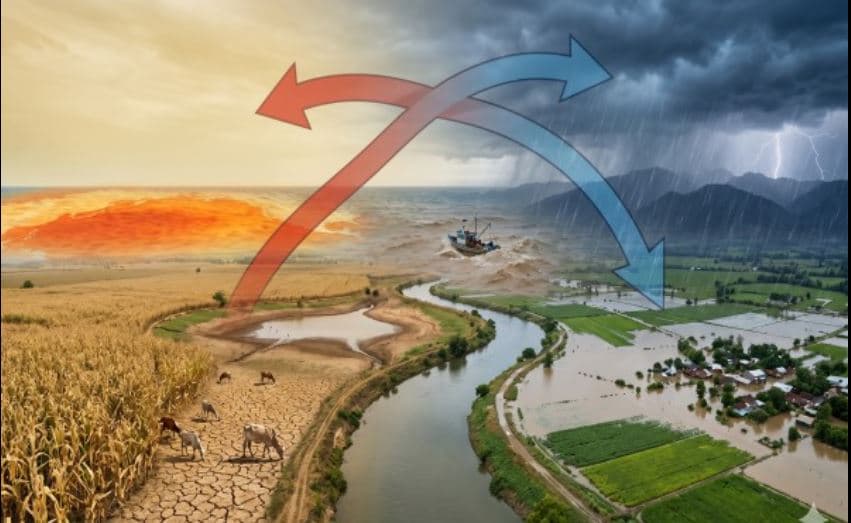
A powerful El Niño is raising the risk of drought, wildfires and reduced farm output across the world. Meteorologists and United Nations agencies warn that it could disrupt food systems through 2027. The abnormal warming of the central and eastern equatorial Pacific behind it is expected to peak in December.
The strain is already showing on several continents. Brazil's state of Pará has declared an emergency after more than 5,000 wildfires since the start of November, and Peru earlier declared one over flood and landslide risks. Meteorologists forecast that Ivory Coast's cocoa output could fall by 21 to 25 percent this year, and the monitoring group Nusantara Atlas says about 2.9 million hectares of forest in Indonesia have been damaged by fire so far in 2026.
Alexander De Croo, head of the United Nations Development Programme (UNDP), said acting now would cost about $36 billion, against $73 billion if action is delayed. The Food and Agriculture Organization (FAO) lists 22 countries at risk, more than half of them in Africa, and its chief economist, Máximo Torero, urged timely protection of crops, livestock and water resources.